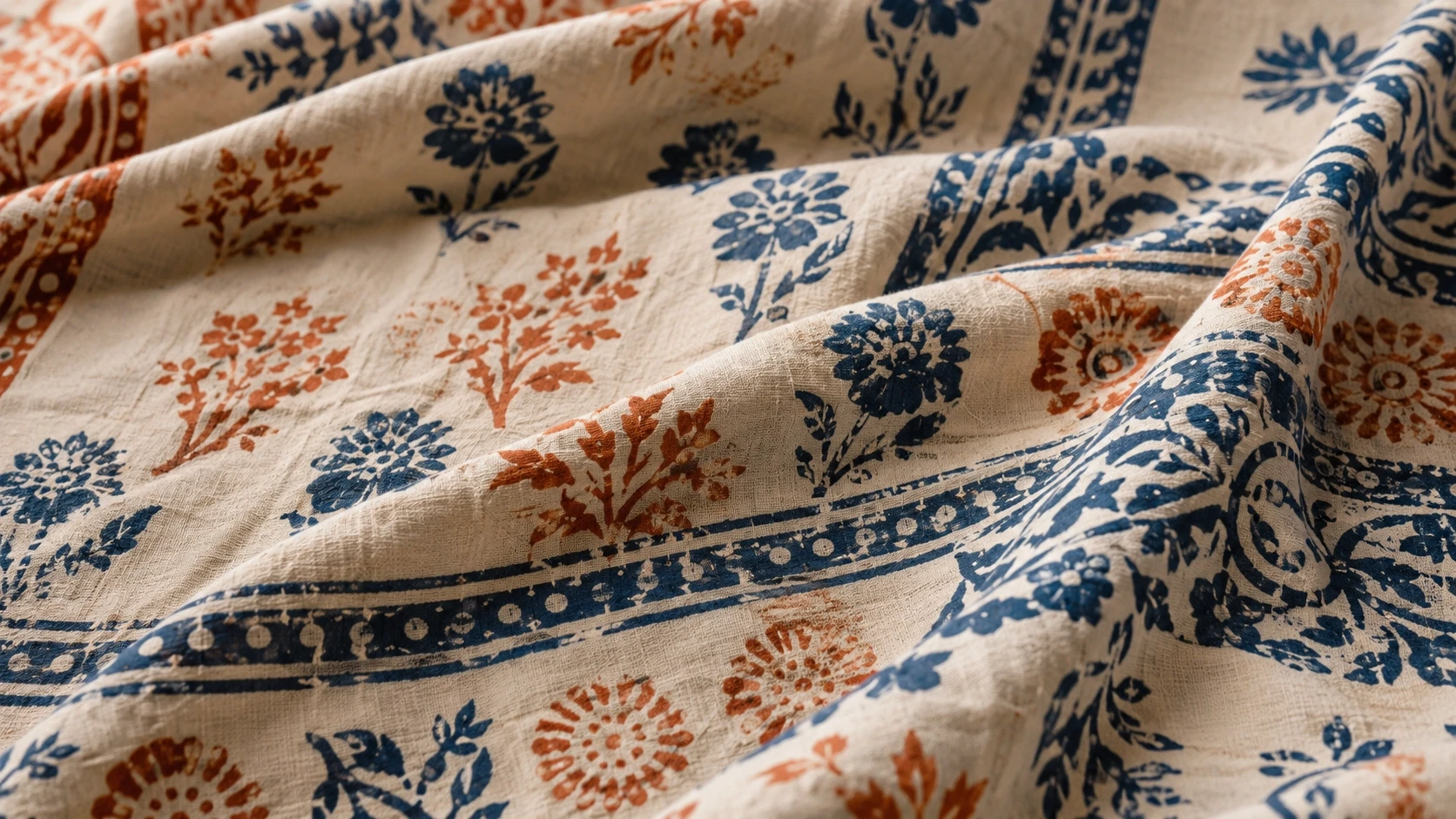
Few textile techniques have endured as long as block printing. Practised across South Asia for centuries, it remains one of the world's oldest methods of decorating fabric, carrying with it a legacy of craftsmanship that predates industrial production by generations. Yet for much of the past two decades, block printing occupied a relatively narrow commercial space. It was often associated with budget ethnic wear, artisan markets, or bohemian fashion rather than premium collections.
That perception is changing. Block printing is experiencing a decisive revival, finding its place in contemporary fashion, luxury interiors, ethical design, and modern lifestyle brands. Its appeal lies not in nostalgia alone, but in its ability to offer something increasingly difficult to achieve through mass production: authenticity. For brands developing collections in 2026, the question is no longer whether block printing remains relevant. It is whether they are positioned to use it with the level of design discipline today's market expects.
What Block Printing Actually Is
At its core, block printing is a remarkably simple process that demands exceptional skill. Hand-carved wooden blocks are engraved with individual motifs before being carefully inked or dyed and pressed repeatedly across fabric. The rhythm of this manual process creates continuous patterns that retain the subtle character of human craftsmanship.
No two metres of block-printed fabric are ever perfectly identical. Slight shifts in alignment, variations in pressure, and natural changes in dye absorption create the gentle irregularities that define the technique. In an era dominated by flawless digital repetition, these differences have become one of block printing's greatest strengths. They signal authenticity rather than inconsistency, reminding the viewer that each piece has passed through skilled hands rather than automated machinery.
The choice of fabric is equally important. Natural fibres such as cotton, voile, poplin, and mulmul provide the ideal surface for absorbing dyes while preserving the crispness of the printed motif. The relationship between cloth, dye, and carved block determines the quality of the finished textile as much as the design itself. In block printing, imperfection is not a production flaw to be corrected. It is the defining characteristic that gives the fabric its individuality.
Why It Is Going Upmarket Now
The renewed interest in block printing reflects broader changes within the fashion and interiors industries. As consumers become more discerning about how products are made, visible craftsmanship has become a mark of quality rather than a niche aesthetic. Luxury is increasingly defined by provenance, process, and longevity instead of overt branding.
This shift is particularly evident in the colour palettes emerging for 2026. Rich indigos, terracotta tones, and muted olives are appearing across premium collections, complementing the tactile qualities of block printing exceptionally well. Interior architects and hospitality designers are specifying block-printed panels for boutique hotels, private residences, and curated commercial spaces where craftsmanship forms part of the design narrative.
The appeal extends beyond visual aesthetics. Block printing carries a story that industrial production cannot easily replicate. Every carved block represents hours of skilled work, every repeated impression reflects manual precision, and every finished textile bears evidence of the maker's hand. In a market that increasingly values substance over spectacle, those qualities have become commercially significant. The new status symbol is impeccable quality rather than conspicuous branding, and block printing aligns naturally with that evolution.
The South Asian Advantage
South Asia occupies a unique position within this resurgence because the region has never lost its connection to the craft. The knowledge required for block printing has been passed between generations of artisans, preserving techniques, motif traditions, and production expertise that remain difficult to reproduce elsewhere.
This heritage provides South Asian design studios with a distinct competitive advantage. Beyond technical capability, there is an instinctive understanding of proportion, rhythm, and decorative vocabulary that comes from working within these traditions over decades. Floral arrangements, geometric borders, ethnic motifs, and layered compositions all draw upon a visual language that continues to evolve without losing its cultural foundation.
At the same time, contemporary block printing is far from static. Traditional craftsmanship is increasingly paired with modern motifs, cleaner layouts, and more restrained colour stories that resonate with international fashion brands and interior collections. Rather than reproducing historical patterns, today's most successful studios reinterpret heritage through a contemporary design lens. The result is work that feels culturally authentic while remaining commercially relevant across global markets.
What This Means for Your Collection
For brands planning future collections, block printing offers remarkable versatility. It moves comfortably between Eastern lawn suits, contemporary Western silhouettes, and luxury home textiles without losing its distinctive identity. The technique adapts equally well to statement garments, coordinated collections, soft furnishings, and decorative interior fabrics.
More importantly, it communicates values that are becoming increasingly important to buyers. In a marketplace saturated with digitally perfect surfaces, handcrafted textiles offer a level of authenticity that cannot be manufactured through precision alone. The slight variation between repeats, the depth of hand-applied colour, and the visible evidence of craftsmanship create products with character rather than uniformity.
Pakistani designers are helping redefine the commercial potential of block printing by pairing traditional methods with sophisticated contemporary palettes. Indigo, terracotta, olive, and other earthy tones create collections that feel rooted in heritage while remaining aligned with modern design preferences. The result is a textile language that bridges history and innovation without compromising either.
As brands continue to diversify their print strategies, block printing has earned its place alongside digital, rotary, flat, and screen techniques as a commercially viable option for premium collections. At Korra Designs, it is one of the five print methods we design for, approached with the same creative rigour and commercial discipline that guide every original print collection. The method may be centuries old, but thoughtful design ensures it continues to feel entirely relevant for the markets of today.