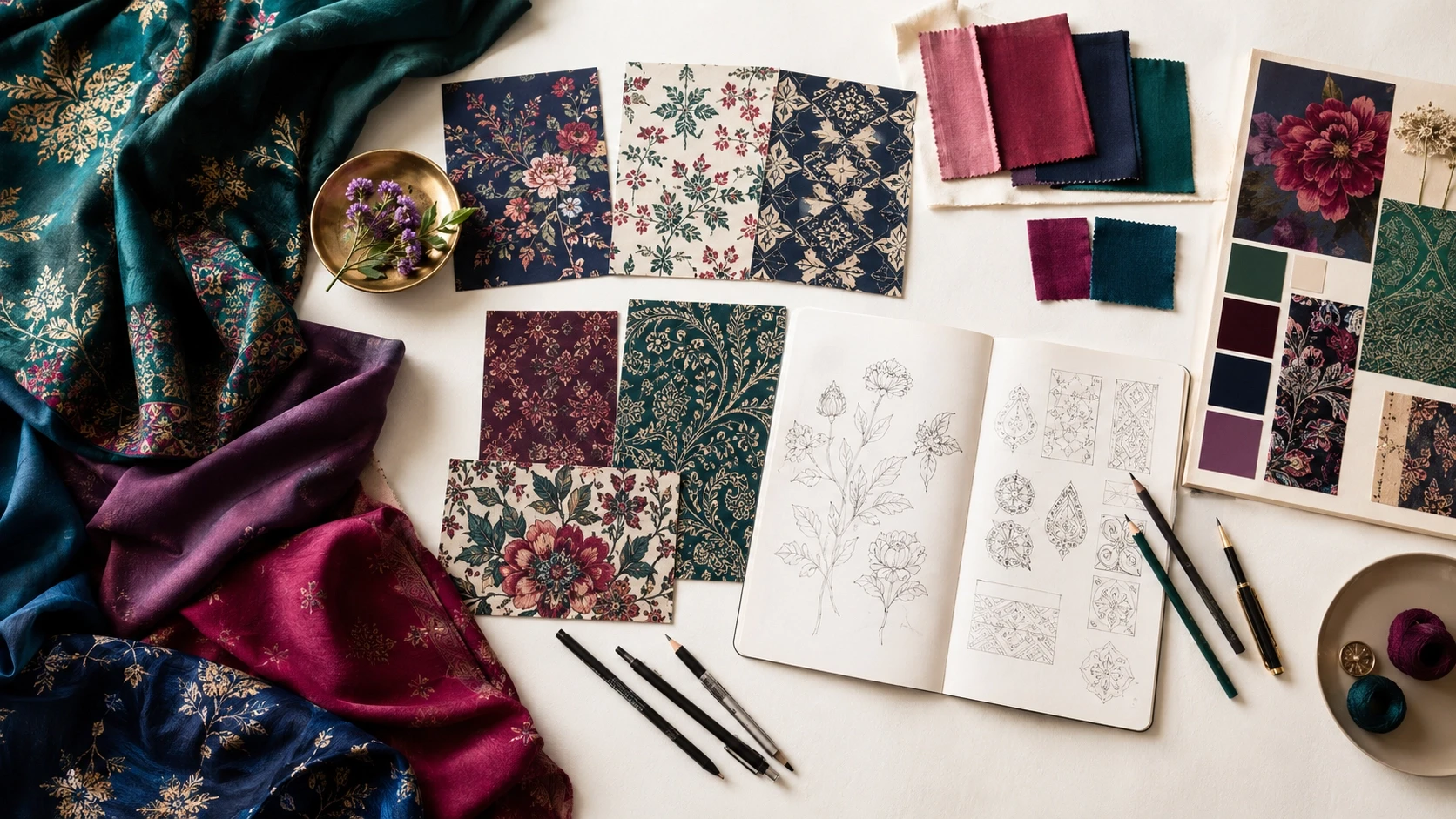
When a new lawn collection launches, the public sees the polished outcome: the campaign imagery, the coordinated colour stories, and the prints that quickly become bestsellers. What remains invisible is the extensive planning that made that launch possible. A successful seasonal collection is rarely the product of a few months' work. More often, it represents a structured development process spanning 12 to 18 months, with decisions made long before the first sample reaches the production floor.
Every stage of that journey is influenced by commercial realities, from changing weather patterns and consumer preferences to sourcing timelines and retail calendars. At the very beginning of that chain sits the print designer. The quality of the initial print direction shapes every subsequent decision, making early design development one of the most commercially significant phases of the entire collection.
How Far in Advance Collections Are Actually Built
Seasonal collections are built around fixed retail windows, not creative convenience. A brand targeting a July delivery may begin developing its collection as early as October of the previous year. This lead time allows sufficient room for trend forecasting, colour development, fabric sourcing, sampling, revisions, production, photography, and distribution before the collection reaches retailers.
The importance of early planning becomes even more apparent when specialised materials enter the equation. Premium fabrics, sustainable textiles, and custom production requirements frequently carry lead times of 30 to 60 days before manufacturing even begins. Delays during the concept stage inevitably create pressure throughout the rest of the development cycle, often forcing compromises in sampling, production quality, or launch timing.
For Pakistani lawn brands, the margin for delay is particularly narrow. Seasonal demand is concentrated within a short window, while many leading brands launch their collections within weeks of one another. Missing that market moment can significantly reduce commercial impact, regardless of the quality of the final product. In this environment, the print design brief should be one of the earliest elements a brand finalises rather than a task deferred until later in the process. Strong collections begin with a clear creative direction, not with production schedules.
The Stages Where Print Design Fits In
Print design is not an isolated creative exercise. It forms part of a broader product development framework that connects design decisions with manufacturing realities and commercial objectives.
The process typically begins with trend forecasting and colour direction. At this stage, brands define the mood of the collection, identify target markets, and establish seasonal palettes informed by emerging consumer preferences. These strategic decisions create the foundation upon which the print brief is developed.
The brief itself translates creative ambition into practical direction. Motif categories, repeat structures, print scale, colour limitations, and intended printing methods are all determined before design work begins. A well-prepared brief provides enough clarity to guide creativity without restricting it.
From there, the print studio enters the development phase. Original artworks are created, reviewed, refined, and adjusted through multiple rounds until they align with both the creative vision and production requirements. Once approved, the final artwork is prepared as a print-ready file suitable for manufacturing and sampling.
Throughout this process, print design remains closely connected to wider collection planning. Fabric selection, colour management, production scheduling, and retail launch calendars all influence the pace and direction of development. The most successful collections emerge when creative and technical teams work within the same structured timeline rather than treating design as a separate function.
Why External Print Studios Are Growing in Demand
As product development cycles continue to accelerate, many fashion brands are reconsidering how they structure their design resources. Rather than relying exclusively on internal teams, an increasing number are working with external print studios to expand creative capacity without increasing permanent overhead.
This approach has become particularly valuable for small and mid-sized brands, where flexibility is often a competitive advantage. External studios provide access to specialised expertise, original artwork, and additional design bandwidth while allowing internal teams to focus on brand strategy, merchandising, and product management. The relationship is complementary rather than competitive.
Many established brands now operate hybrid design models, combining in-house creative direction with outsourced print development. This allows them to maintain complete control over collection identity while benefiting from fresh perspectives and a broader range of original concepts. An experienced external studio also offers the practical advantages of faster turnaround, dedicated project focus, and predictable design costs, with investment directed towards completed work rather than ongoing staffing.
The pace of the market reinforces this shift. The traditional model of two major seasonal collections has steadily evolved into more frequent, targeted product releases responding to changing consumer demand and global trends. More launches inevitably require more design output, making external collaboration an increasingly practical part of modern collection planning.
What a Good Print Brief Should Include
A successful print brief provides more than a list of aesthetic preferences. It creates a shared understanding between the brand and the design studio, reducing uncertainty while improving the efficiency of the development process.
The strongest briefs begin by defining the intended market and customer. Understanding who the collection is designed for influences every creative decision that follows. From there, the technical framework should be established, including the intended printing method, whether digital, rotary, screen, block, or flat, since each process carries its own design considerations.
Colour direction should be clearly articulated, whether through a defined seasonal palette or practical production limitations. Motif references help establish the visual language of the collection, whether it leans towards florals, ethnic patterns, geometric layouts, abstract compositions, or textured surfaces. Equally important are specifications for repeat structures, scale, and layout, ensuring artwork is developed with manufacturing requirements in mind from the outset.
Finally, practical details complete the brief. File specifications, technical requirements, production deadlines, and agreed revision stages help align expectations across the design and manufacturing teams, allowing projects to progress with greater confidence and fewer delays.
A well-developed collection is rarely the result of isolated creativity. It is the product of careful planning, clear communication, and disciplined execution from the first concept through to final production. At Korra Designs, we support brands throughout that journey, from shaping the initial creative brief to delivering print-ready artwork for manufacturing. For businesses still refining their collection direction, the design process often begins long before the first motif is drawn, and establishing that foundation is where the strongest collections are built.